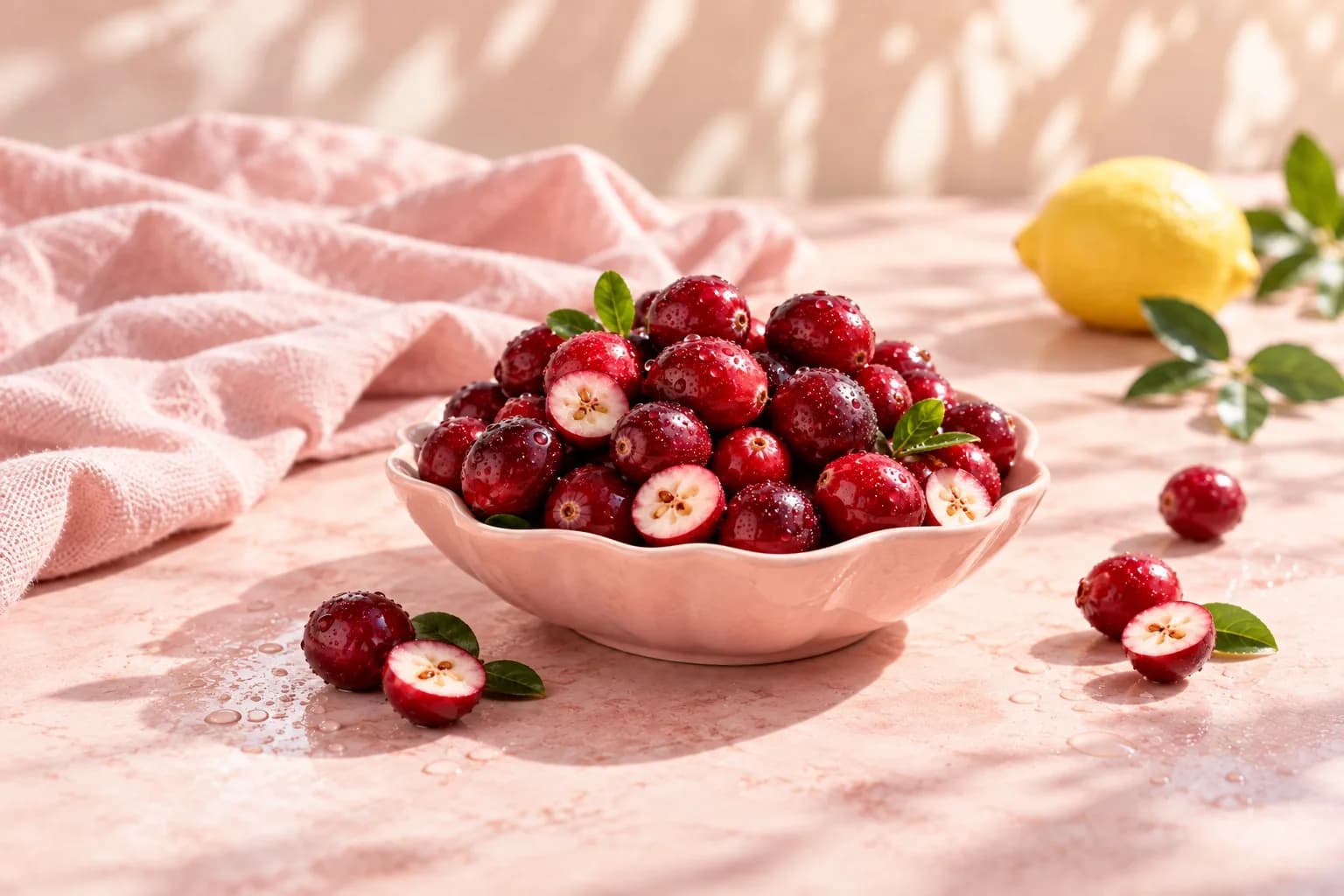

Cranberry PACs. If you've shopped for a women's supplement lately, you've seen those letters on a label and maybe wondered whether they're marketing or science. Short answer: science, with a catch.
Cranberry has been the "women's berry" for generations, usually as a tart juice your tita swears by, and lately as a capsule in your Shopee cart. The family of compounds researchers focus on is proanthocyanidins, or PACs. Here's what they are, why cranberry's are unusual, what the research actually shows about cranberry and urinary tract health, and why juice and extract are not the same thing.
What are cranberry PACs (proanthocyanidins)?
Proanthocyanidins are a group of polyphenols, the same broad family of plant compounds behind the color and astringency of red wine, dark chocolate, grapes and tea1. They're what makes a cranberry mouth-puckering.
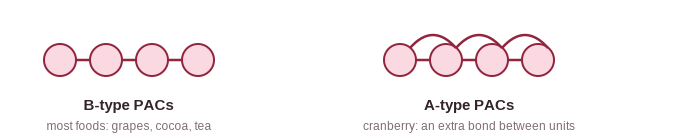
Here's the twist. Most foods contain "B-type" PACs. Cranberry is unusual because a large share of its PACs are "A-type," a structure with an extra chemical bond between the units1. That small difference in shape turns out to matter a lot in the lab.
Why are A-type PACs special?
Because of something called anti-adhesion.
Some bacteria, including the E. coli strains most often involved in urinary tract infections, have tiny hair-like structures (fimbriae) that let them cling to the cells lining the urinary tract2. Clinging is step one of causing trouble.
In laboratory studies, cranberry A-type PACs have been shown to reduce the ability of those bacteria to stick to cells. B-type PACs from other foods, tested the same way in that lab setting, didn't1, 2. That's a big reason cranberry gets studied for urinary tract health and grapes don't.
One more detail researchers care about: dose. A 2010 study tested a range of daily PAC amounts and found the anti-adhesion effect in urine was dose-dependent2. Since then, 36mg of PACs a day (measured by a standard method called DMAC) is a figure often cited in the research and on labels. If you see "36mg PACs" on a box, that's where it comes from.
Why cranberry is different
A small change in shape that matters a lot in the lab.
Howell 2010 found the anti-adhesion effect in urine was dose-dependent. Popelle Cranberry has 30mg as an ingredient bonus.
What does the research say about cranberry and urinary tract health?
This is the part where brands tend to get carried away, so let me stick to the best evidence we have.
The Cochrane Collaboration reviewed 50 trials with more than 8,800 participants in 2023. Their conclusion: cranberry products (juice, tablets or capsules) were associated with a reduced risk of urinary tract infections in women with recurrent UTIs, in children, and in people susceptible to UTIs after a medical procedure, with moderate-certainty evidence. They found no clear benefit in elderly institutionalized adults, pregnant women, or people with bladder-emptying problems3.
Two honest caveats:
- It's about cranberry products in trials, at the doses those trials used, in specific groups of people. It's not a finding about every cranberry product, and it's not a finding about Popelle.
- It's not treatment. Cranberry has not been shown to treat an existing infection, and a UTI needs a doctor and, usually, antibiotics4. No berry replaces that.
So, "cranberry supports urinary tract health" is a fair summary of a large body of research. "Cranberry cures UTIs" is not.
2023 Cochrane review: 50 trials, 8,800+ people
Findings about cranberry products in trials, not about any supplement, and never a treatment.
 Women with recurrent UTIs
Reduced risk, moderate-certainty.
ChildrenReduced risk, moderate-certainty.
After a medical procedureReduced risk, moderate-certainty.
 Elderly in care homes
No clear benefit.
Pregnant womenNo clear benefit.
Bladder-emptying problemsNo clear benefit.
Cranberry juice vs. cranberry extract: what's the difference?
Your tita's juice carton and a standardized extract are very different things.
Cranberry juice (cocktail) | Standardized cranberry extract | |
|---|---|---|
PAC content | Low and variable; often not listed | Measured and declared (e.g. "30mg A-type PACs") |
Sugar | High, often 25g+ per glass of juice cocktail | Low |
Consistency | Varies by brand, batch and dilution | Standardized by the DMAC method5 |
Daily practicality | A glass or two a day, every day | A capsule or sachet |
Most of the newer research used extracts or capsules precisely because you can measure what's in them3. If you want cranberry for the PACs, look for the PAC number on the label, not the word "cranberry" in big letters.
Questions, answered
What are PACs in cranberry?
PACs are proanthocyanidins, natural polyphenol compounds. Cranberry's are mostly A-type, a structure rare in other foods, and they're the compounds researchers link to cranberry's anti-adhesion effect in lab studies.
How much cranberry PACs per day is in the research?
Some studies used 36mg of PACs a day, measured by the DMAC method, and others used different amounts. Amounts in products vary, so check the label for the PAC figure rather than the total cranberry weight.
Does cranberry juice work the same as cranberry extract?
Not reliably. Juice cocktails are high in sugar and usually don't declare PAC content, so you don't know what you're getting. Standardized extracts list their PAC content, which is what the research measures.
Can cranberry treat a UTI?
No. Cranberry has not been shown to treat an existing infection. If you have UTI symptoms, see a doctor; antibiotics are the treatment.
Is cranberry safe to take every day?
Cranberry extract is generally well tolerated as a food supplement. If you're pregnant, breastfeeding, on blood thinners, or have kidney stones or a medical condition, check with your doctor first.
xo, NicoleNicole Borromeo, Founder, Popelle
References
- Howell AB, et al. A-type cranberry proanthocyanidins and uropathogenic bacterial anti-adhesion activity. Phytochemistry. 2005;66(18):2281-2291.
- Howell AB, et al. Dosage effect on uropathogenic Escherichia coli anti-adhesion activity in urine following consumption of cranberry powder standardized for proanthocyanidin content: a multicentric randomized double blind study. BMC Infect Dis. 2010;10:94.
- Williams G, Hahn D, Stephens JH, Craig JC, Hodson EM. Cranberries for preventing urinary tract infections. Cochrane Database Syst Rev. 2023;4(4):CD001321. (Updated November 2023: 11(11):CD001321.)
- Mayo Clinic. Urinary tract infection (UTI): Diagnosis and treatment. mayoclinic.org/diseases-conditions/urinary-tract-infection/diagnosis-treatment/drc-20353453.
- Prior RL, et al. Multi-laboratory validation of a standard method for quantifying proanthocyanidins in cranberry powders. J Sci Food Agric. 2010;90(9):1473-1478.