
Feminine hygiene is an aisle, a category, and an entire TikTok genre. It's also one of the few areas of wellness where doing less is usually the right answer. The products are many. The habits that matter are few.
I grew up with the same mix of myths we all did: wash more, use the scented one, douche after your period. Then I learned what OB-GYNs actually say, which is mostly "please stop." So here's the everyday routine that holds up, in the order your day happens.
What's the difference between the vulva and the vagina?
Worth a sentence, because the whole routine depends on it. The vulva is the outside: the lips, the clitoris, the opening. The vagina is the internal canal.
The vagina cleans itself. Its lining produces discharge that carries out dead cells and microbes, and its resident Lactobacillus bacteria keep it mildly acidic (around pH 3.8 to 4.5)1, 2. Nothing you buy improves on that. The vulva, being skin, is the only part that needs washing.
(The pH story is its own article: Vaginal pH Balance: What's Normal and What Can Affect It?.)
How should you wash down there?
Warm water and your hand. That's the routine OB-GYNs recommend, and it's the one that holds up1. Every feminine wash on the Shopee front page is optional.
- Wash the vulva only, once a day or after sweating, with warm water. A mild, unscented, pH-balanced cleanser is fine if you prefer one, used on the outside only.
- Never wash or douche inside the vagina. Douching flushes out Lactobacillus and has been associated with a higher risk of bacterial vaginosis in studies3.
- Skip scented products: washes, sprays, powders, scented wipes and scented pads or liners. Fragrance is a common irritant for vulvar skin1.
- Front to back, always, when you wipe.
- Pat dry. Don't rub.
If the product promises to make you "fresh" or "odor-free," that's a sign it's solving a problem you don't have. A healthy vagina has a mild scent. That's normal.
The whole routine
Doing less is usually the right answer.
 Keep
- Warm water on the vulva, once a day or after sweating
- A mild, unscented cleanser, outside only, if you like one
- Front to back, pat dry
- Cotton underwear, change out of damp clothes
 Skip
- Washing or douching inside
- Scented washes, sprays, wipes, powders
- Scented pads and liners
- "Fresh" and "odor-free" promises
What underwear and clothes are best for vaginal health?
Manila heat makes this one matter more than it would in a cold country.
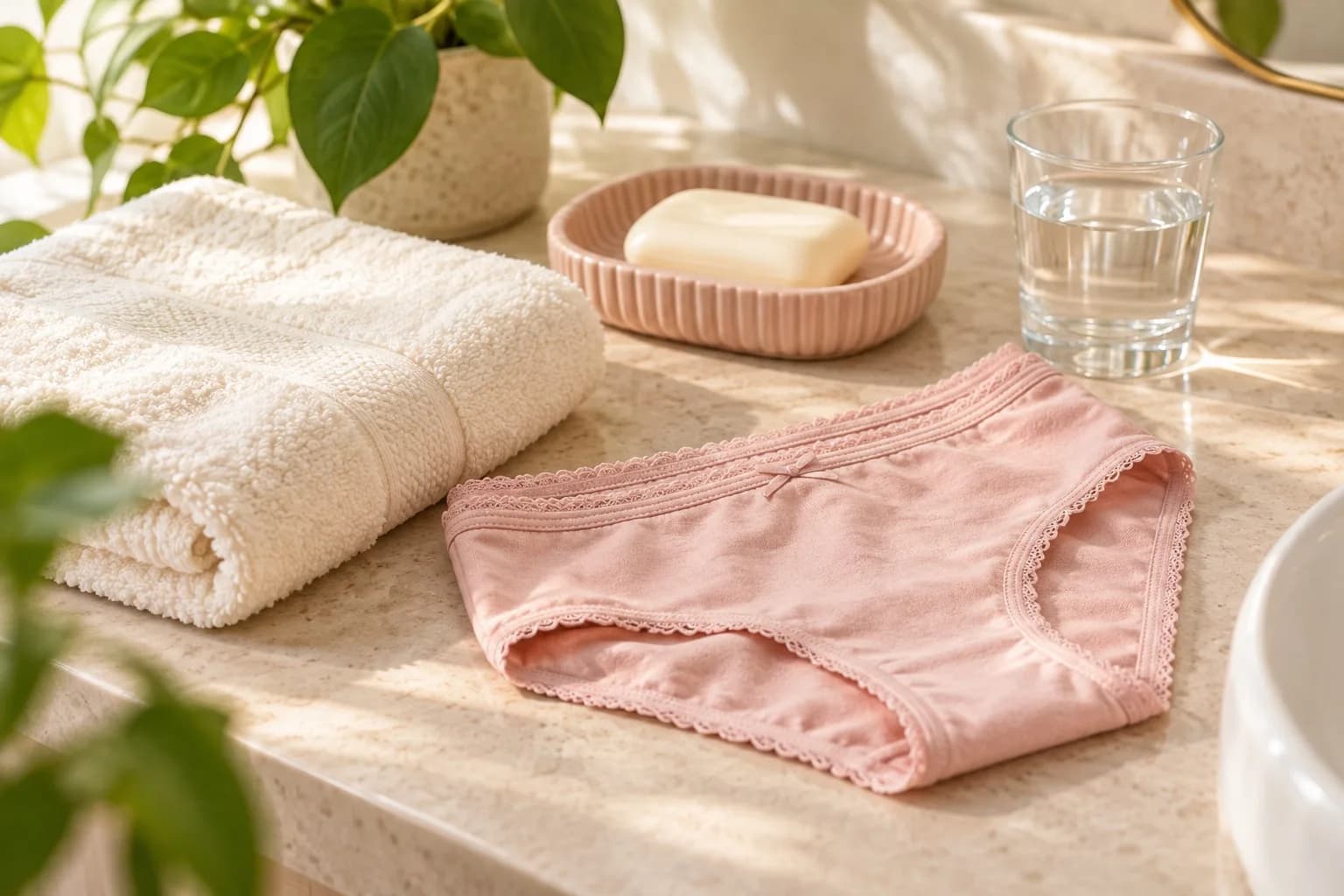
- Cotton, or at least a cotton gusset. It breathes. Synthetics can trap heat and moisture, and most OB-GYNs suggest breathable cotton underwear.
- Change out of damp clothes fast. Gym leggings, swimsuits, a sweaty commute: change when you get home, not after dinner.
- Loose at night. Some OB-GYNs suggest sleeping without underwear, or in loose cotton, to let the area breathe.
- Wash new underwear before wearing and use a mild detergent. Skip fabric softener on underwear if you're sensitive.
How do you handle periods, sex and the gym?
Periods. Change tampons every 4 to 8 hours (never longer than 8), change pads as often as feels comfortable, and follow the maker's instructions for menstrual cups4. Unscented products only. Your pH naturally rises a little during your period (that's normal), so there's nothing to "fix" with a special wash.
Sex. Peeing after sex is common advice, and many doctors suggest it5. The idea is that it may help clear bacteria near the urethra. The evidence is limited, so think of it as a low-effort habit, not a guarantee. Wash the vulva with water afterward if you like. Many OB-GYNs suggest water-based or silicone-based lubricants over flavored, warming or scented ones, which can irritate.
The gym. Breathable gear, change right after, shower when you can. If you can't shower before the MRT ride home, at least change your underwear.
Hair removal. Shaving and waxing are your choice, not a hygiene requirement. Pubic hair isn't dirty. If you remove it, use a clean razor and go gently to avoid ingrowns and irritation.
Periods, sex and the gym
The three moments that need a little extra care.
 Periods
Change tampons every 4 to 8 hours, never longer than 8. Unscented products only.
 Sex
Peeing afterwards is an easy habit many doctors suggest. Water-based or silicone lube over scented ones.
 Gym
Change out of sweaty gear soon after, and shower when you can.
What about probiotics and feminine hygiene?
Probiotics aren't hygiene, but they come up in the same conversation, so here's the honest version. The healthy vaginal microbiome is dominated by Lactobacillus, which is why many women's probiotic formulas are built around Lactobacillus species2. A daily probiotic is a habit some women add to their routine. It's not a wash, not a fix, and not a reason to skip the basics above. More in Probiotics for Women.
Questions, answered
Should I use feminine wash?
You don't need one. Warm water on the vulva is enough. If you like a cleanser, choose a mild, unscented one and use it on the outside only, never inside.
Is douching ever a good idea?
No. ACOG and other major bodies advise against it. Douching washes out protective Lactobacillus and has been linked to a higher risk of bacterial vaginosis in studies.
How often should I wash down there?
Once a day, or after sweating, is plenty. Over-washing can irritate the skin and disrupt the balance.
Is it normal for a vagina to have a smell?
Yes. A mild, slightly musky scent is normal and changes through your cycle. A strong, fishy or sudden new smell is a reason to see a doctor, not to buy a spray.
Do probiotics replace good hygiene?
No. Probiotics are a daily habit, not a wash or a treatment. The habits in this article come first.
xo, NicoleNicole Borromeo, Founder, Popelle
References
- ACOG (American College of Obstetricians and Gynecologists). Vulvovaginal Health (patient FAQ), acog.org/womens-health/faqs/vulvovaginal-health, and Vaginitis (patient FAQ), acog.org/womens-health/faqs/vaginitis.
- Ravel J, et al. Vaginal microbiome of reproductive-age women. Proc Natl Acad Sci USA. 2011;108(Suppl 1):4680-4687.
- Martino JL, Vermund SH. Vaginal douching: evidence for risks or benefits to women's health. Epidemiol Rev. 2002;24(2):109-124.
- US FDA. The Facts on Tampons and Tampon Safety. fda.gov/consumers/consumer-updates/facts-tampons-and-tampon-safety.
- Mayo Clinic. Urinary tract infection (UTI): Symptoms and causes (prevention section). mayoclinic.org/diseases-conditions/urinary-tract-infection/symptoms-causes/syc-20353447.